Problem Statement
Customer service agents faced significant challenges in managing service requests, tracking customer histories, and providing timely updates. The lack of an integrated system resulted in inefficiencies, customer dissatisfaction, and missed opportunities for upselling services.
Objectives
Develop a user-friendly CRM system for service management.
Enable efficient tracking of customer service histories.
Simplify communication between service agents and customers.
Improve overall customer satisfaction and loyalty.
Target Audience
Primary
Customer care agents handling automobile service queries
Secondary
Service managers overseeing operations and performance metrics.
Research & Analysis
User Interviews: Conducted interviews with customer care agents and service managers to understand pain points and workflows.
Competitor Analysis: Analyzed existing service CRM solutions to identify gaps and best practices.
Surveys: Collected data from end-users to prioritize features and usability requirements.
Key Insights
Agents struggled with fragmented tools and manual processes.
Service history visibility was critical for resolving customer queries quickly.
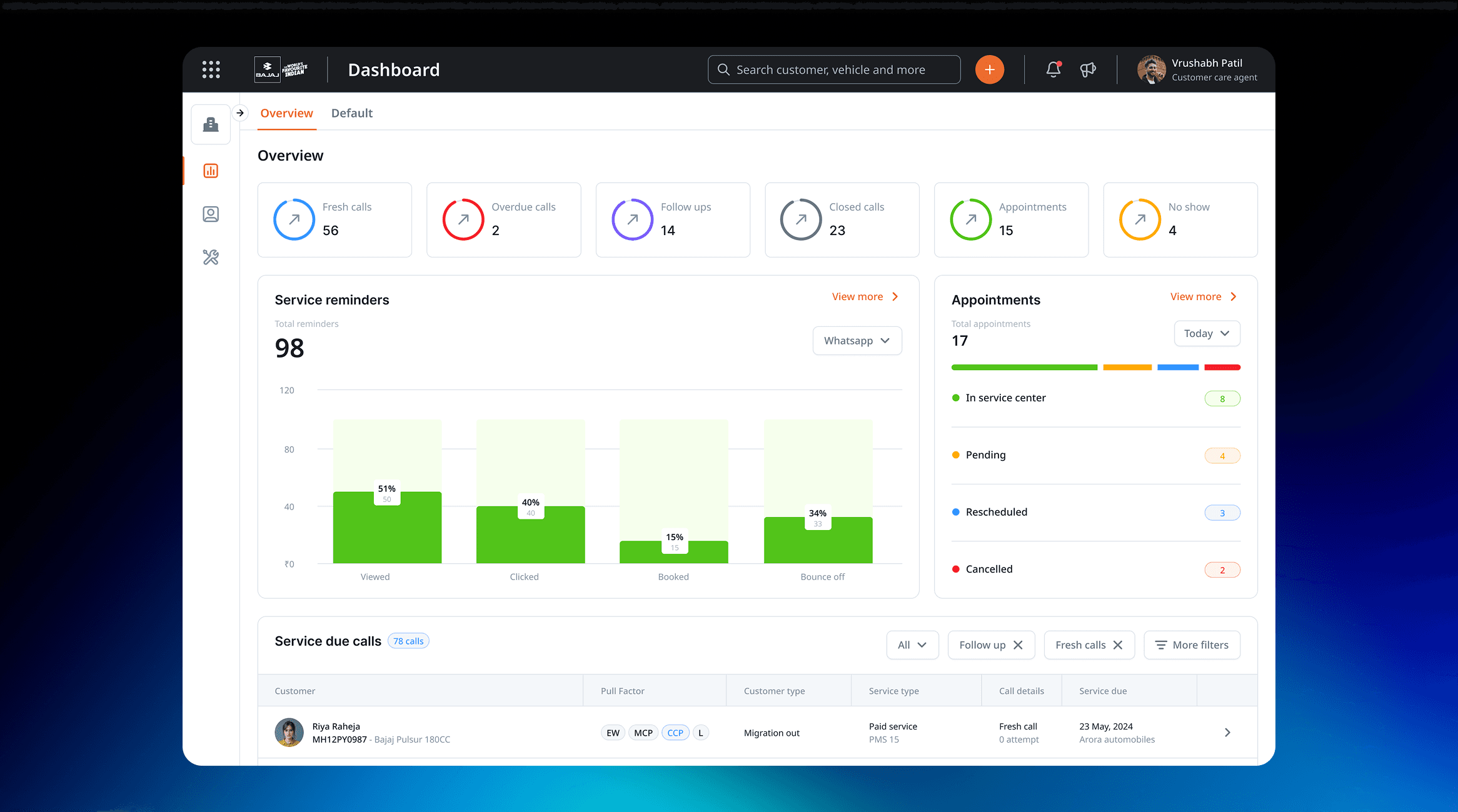
Users preferred a dashboard summarizing key metrics and tasks.
Design Process
Personas:
Agent Persona: Needs a simple, quick interface to handle high volumes of customer requests.
Manager Persona: Requires detailed analytics and oversight to monitor team performance.
User Journey Mapping:
Mapped workflows for common tasks such as logging a service request, tracking service status, and resolving issues.
Service Request Logging
Customer History Dashboard
Issue Resolution Tracker
Notifications and Follow-ups
UI Design: Designed a clean, intuitive interface focusing on:
Color Coding: Highlighting service statuses (e.g., pending, in progress, completed).
Information Hierarchy: Prioritizing critical data for quick decision-making.
Responsiveness: Ensuring usability across devices.
Prototyping:
Developed interactive prototypes for user testing to validate workflows and usability.
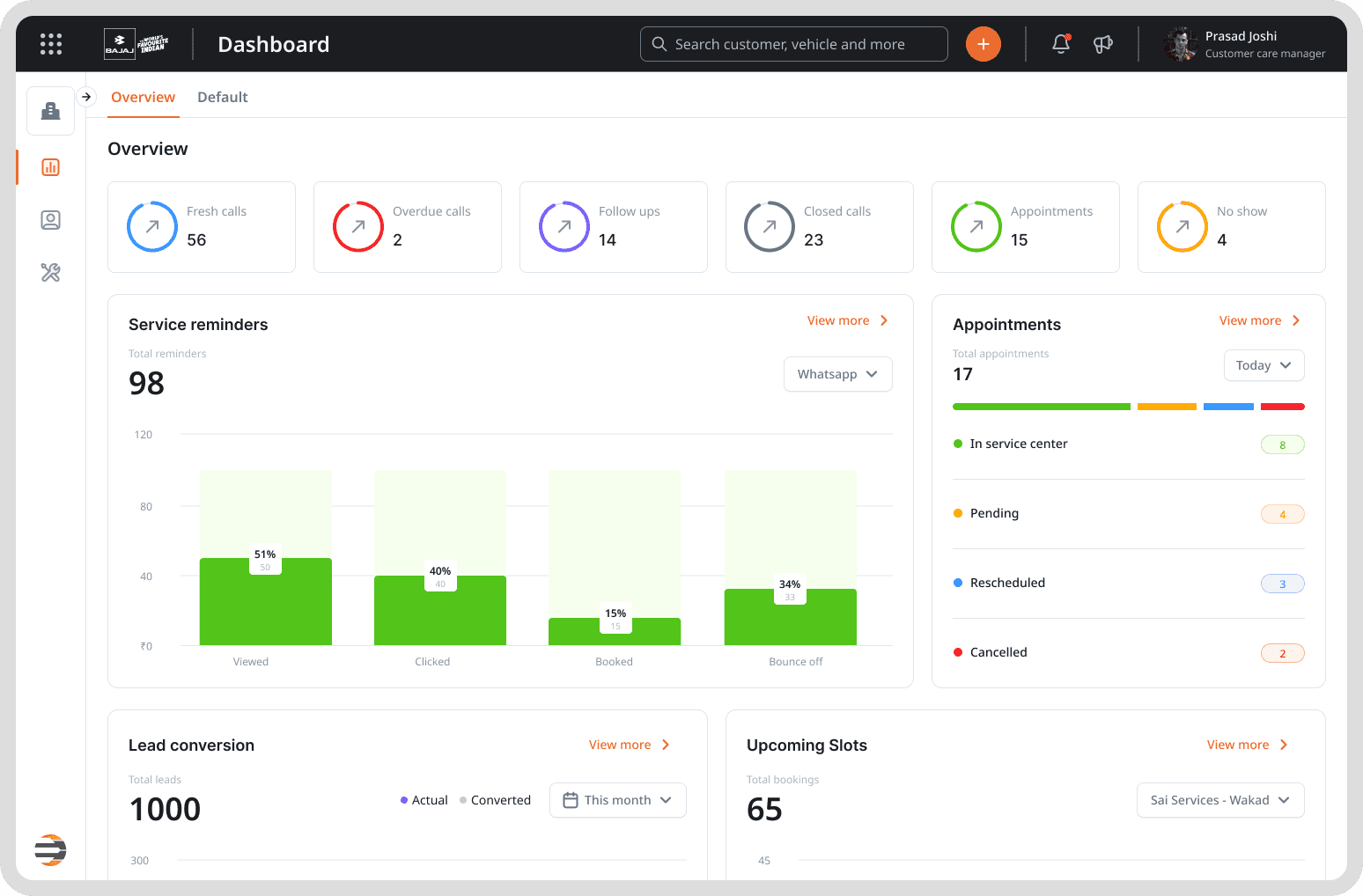
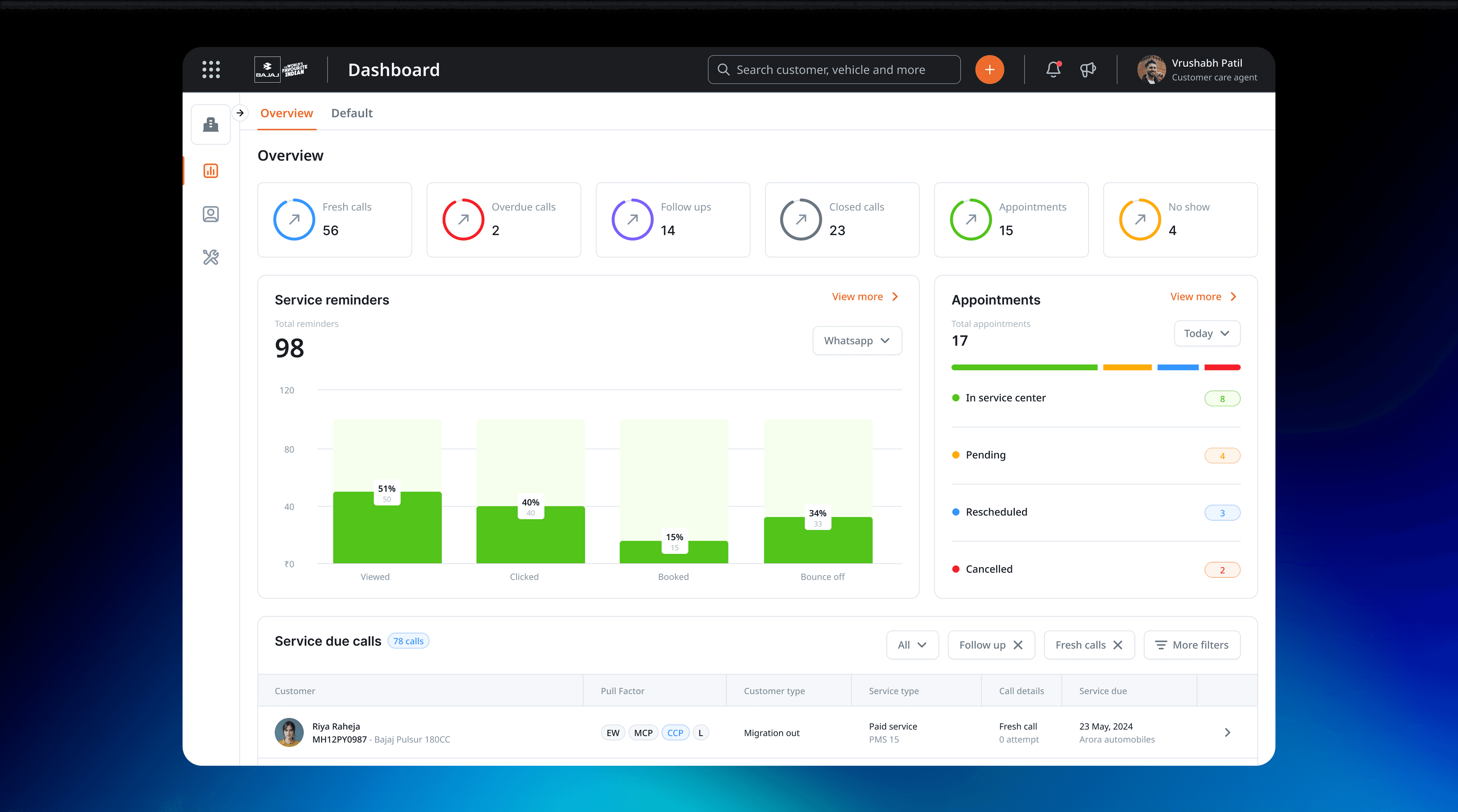
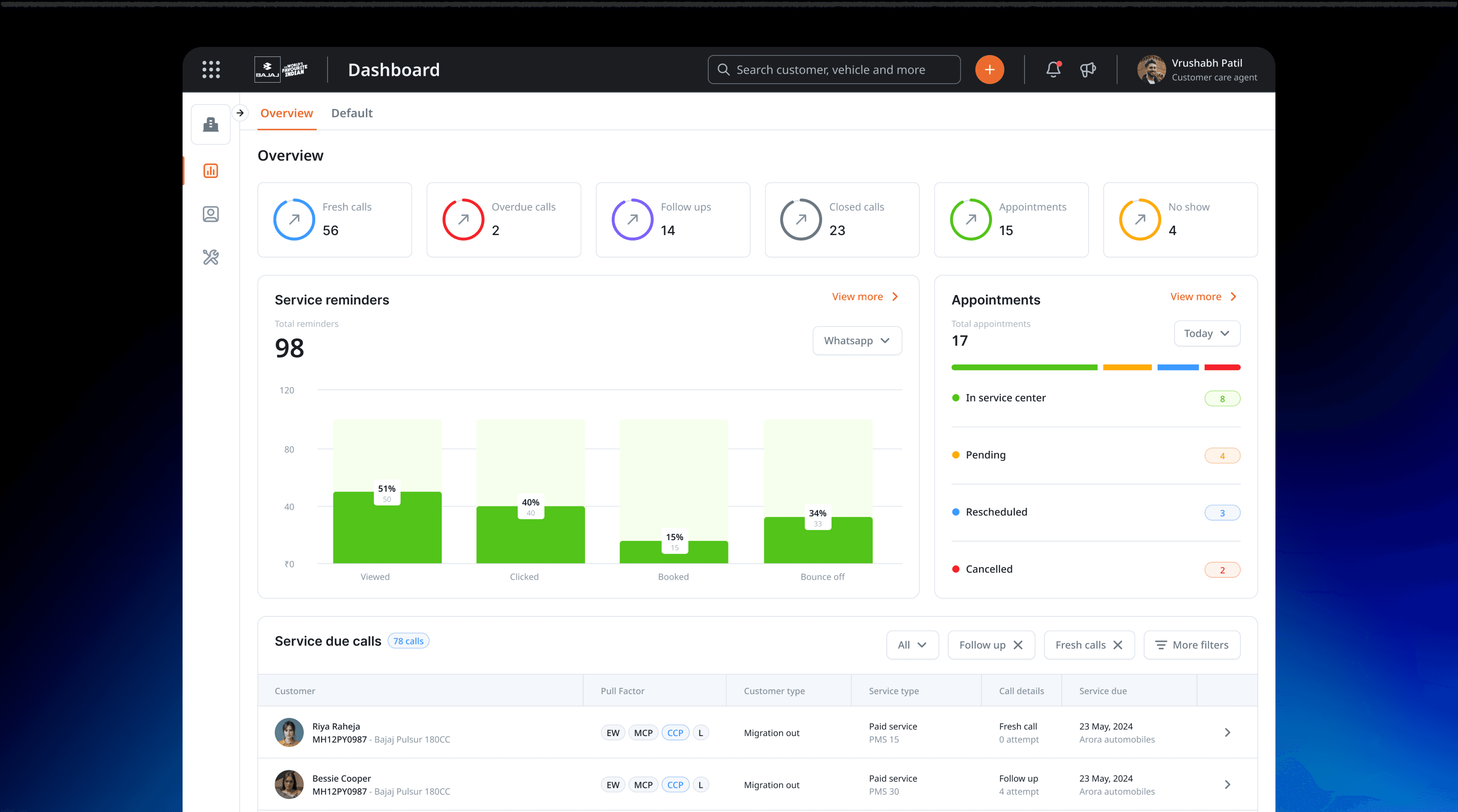
Dashboard:
Overview of pending tasks, service KPIs, and customer feedback.
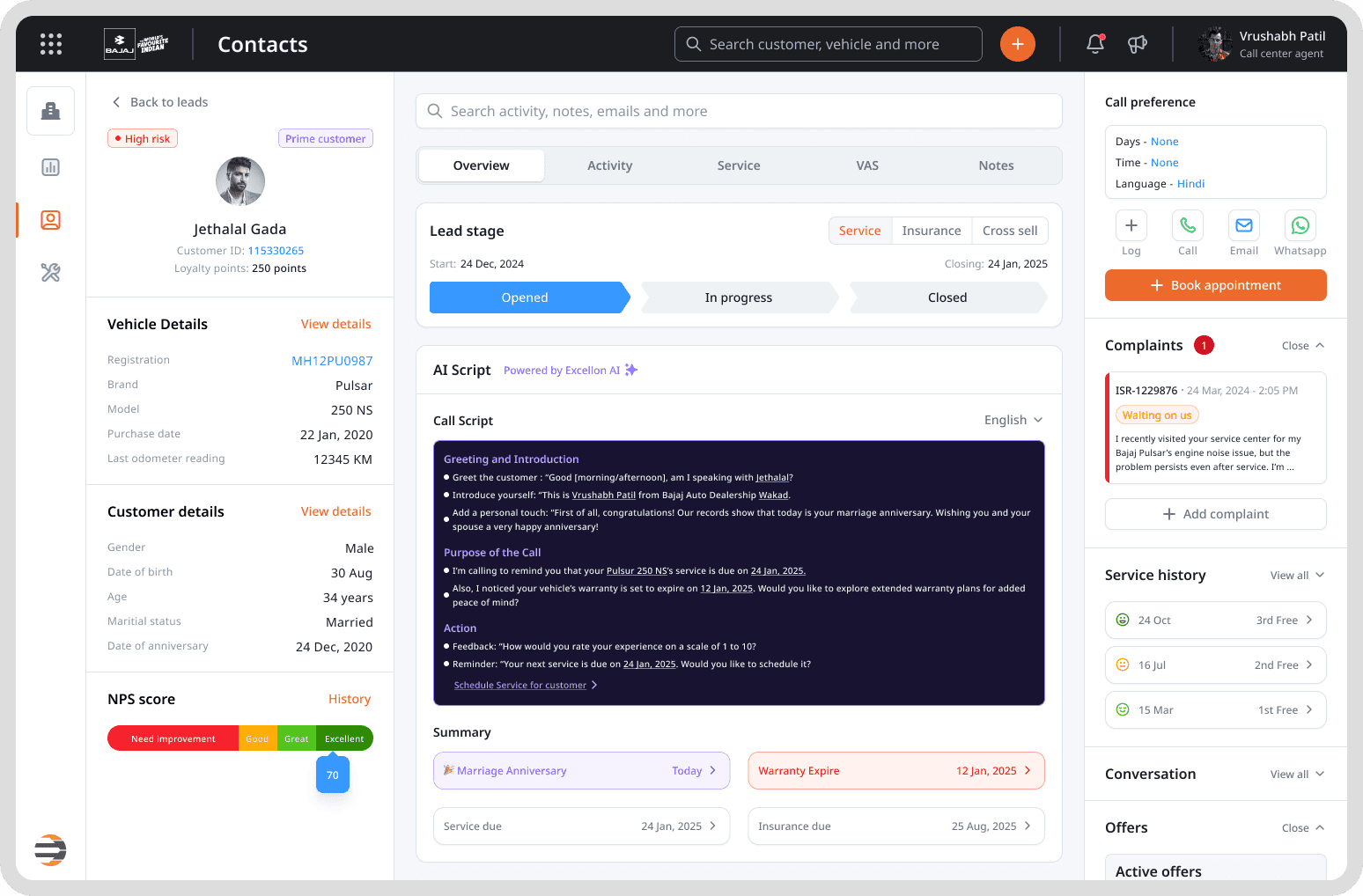
Customer Profile:
Consolidated view of customer information and service history.
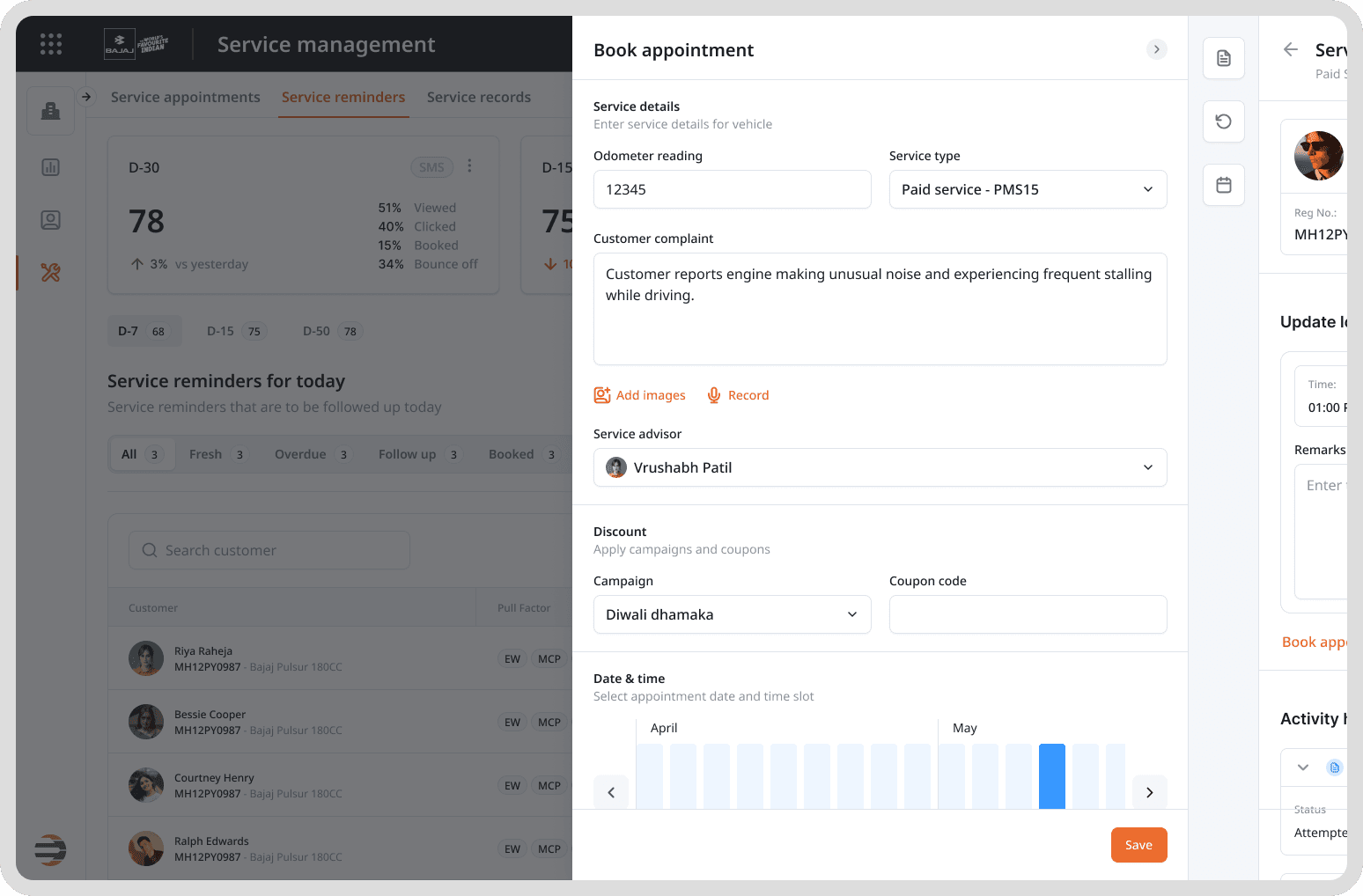
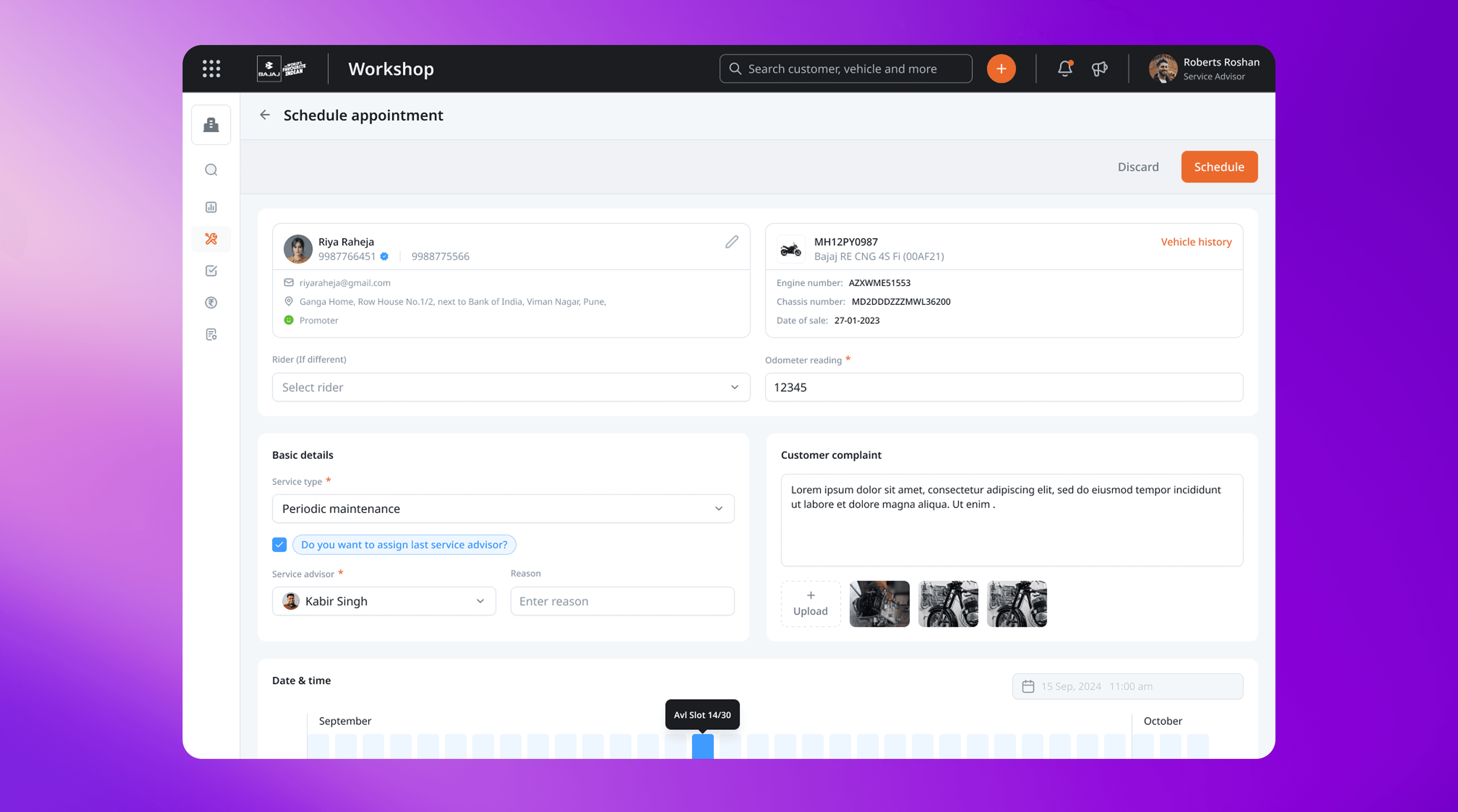
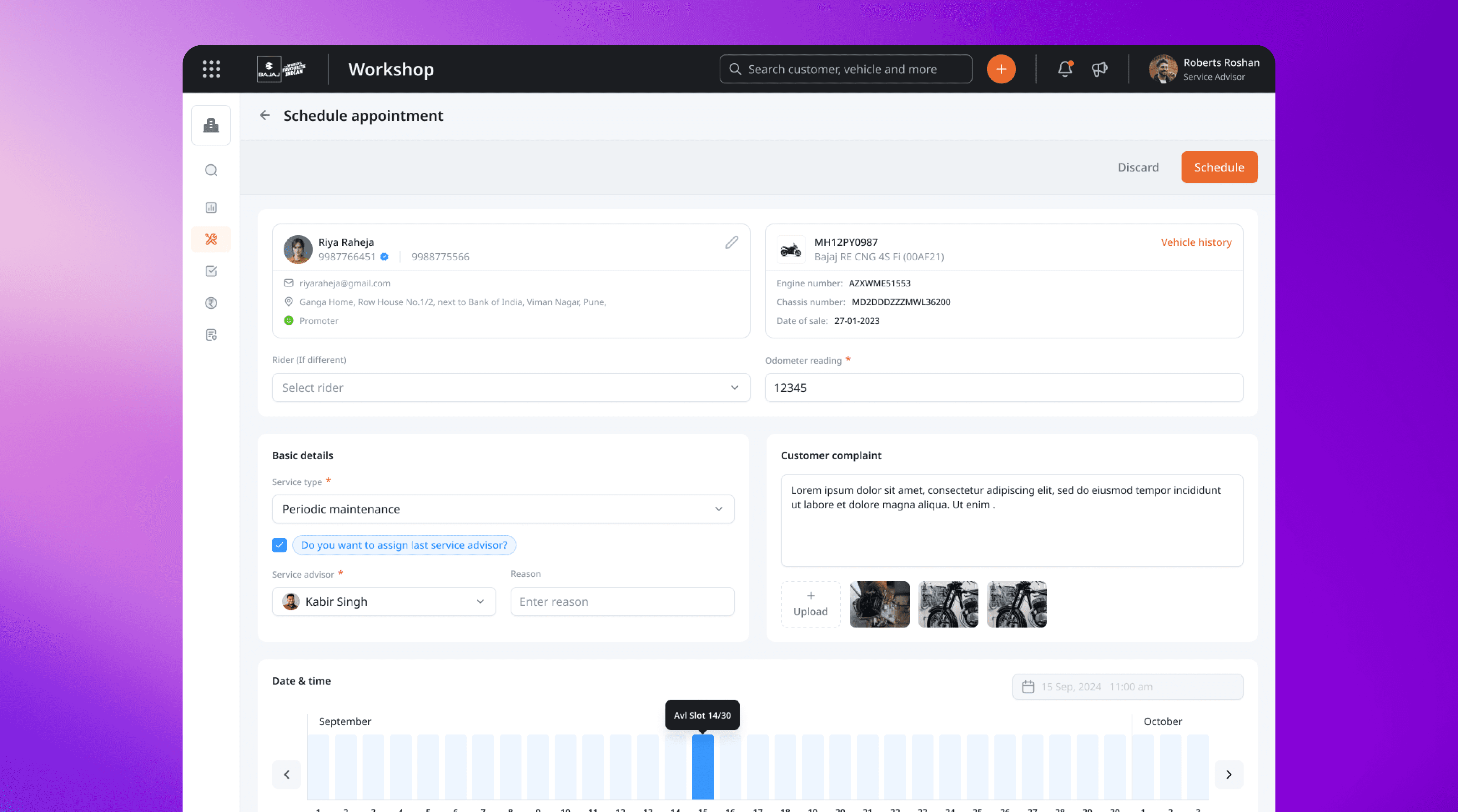
Service Booking:
Intuitive interface for scheduling service appointments, enabling quick and hassle-free booking for customers.
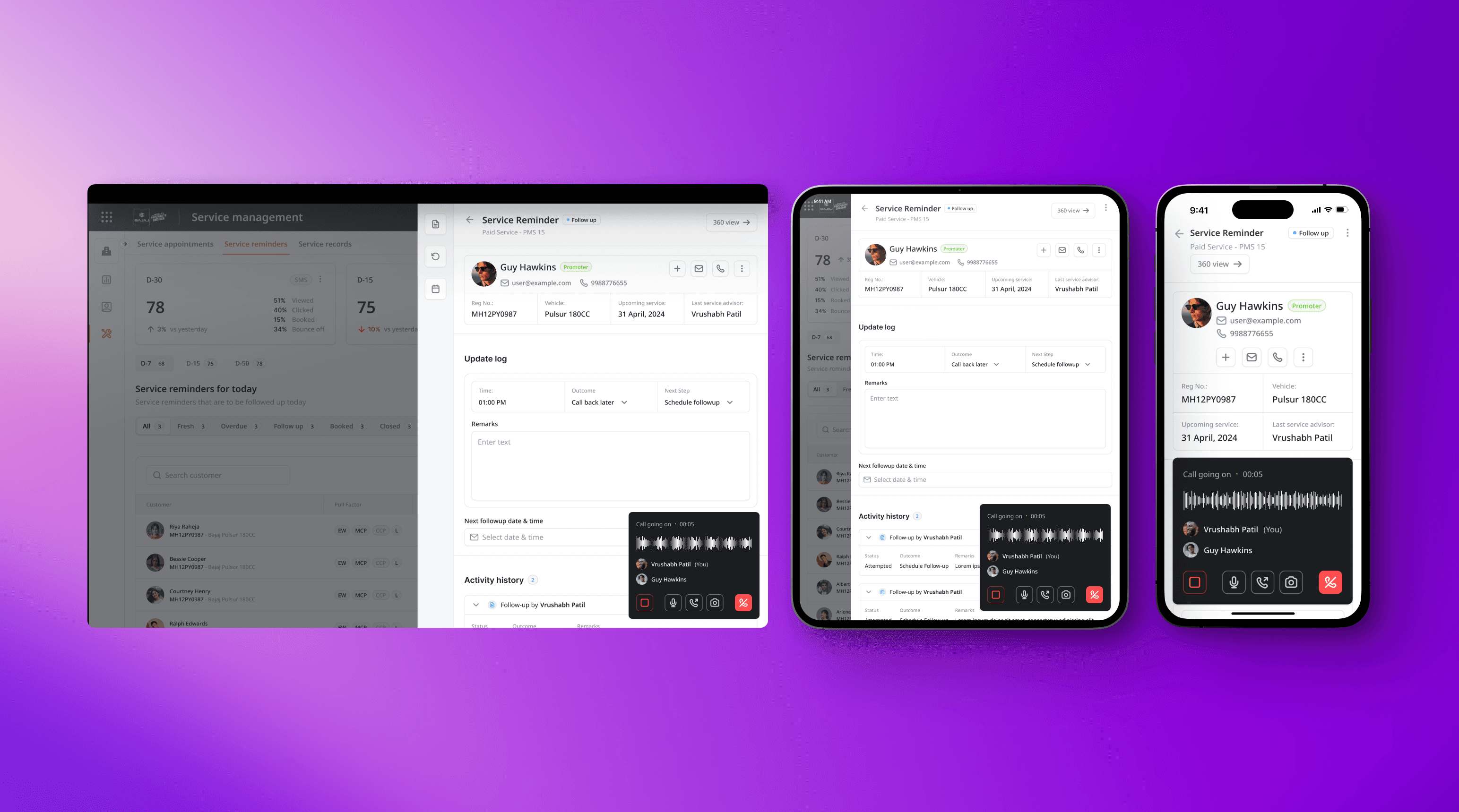
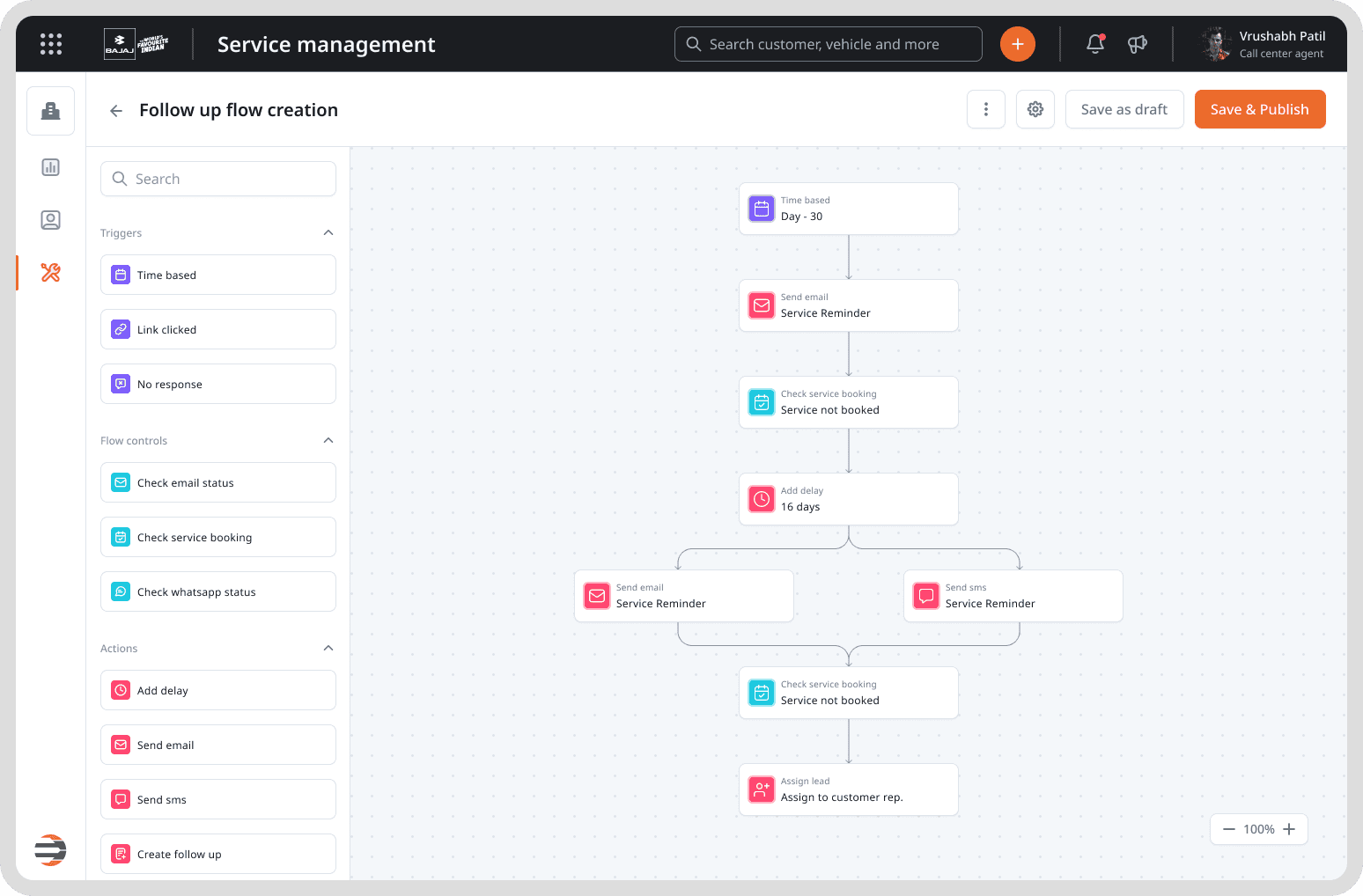
Service Reminder Flow:
Automated reminders for upcoming services, ensuring timely communication and improved customer retention.
Challenges:
Balancing simplicity for agents with detailed analytics for managers.
Ensuring seamless integration with existing dealership systems.
Designing for scalability to accommodate future feature additions.
Outcomes:
Improved Efficiency: Agents reduced time spent on managing service requests by 40%.
Higher Customer Satisfaction: Positive feedback scores increased by 25% post-implementation.
Enhanced Insights: Managers gained actionable insights through analytics dashboards.
Reflection and Learnings:
Early user involvement ensured the design met real-world needs.
Prototyping and iterative testing were critical to refining the user experience.
A modular design approach allowed flexibility for future enhancements.
Conclusion:
The Service CRM successfully addressed the challenges faced by customer care agents and service managers. By streamlining workflows and improving customer interactions, it delivered tangible benefits to both users and the business.
Projects